

SFLR is a short texting abbreviation used to acknowledge that someone is replying later than expected. In most casual conversations, it means “Sorry For Late Reply,” giving the sender a quick way to recognize a delayed response before continuing the conversation.
The SFLR Meaning is simple, but its tone depends on context. A message to a friend can sound relaxed and friendly, while the same abbreviation in professional communication may seem too informal. Understanding the setting, relationship, and conversational tone helps you decide whether SFLR is appropriate.
You Saw Those Four Letters and Had No Clue
The SFLR Meaning in texting is “Sorry For Late Reply.” It belongs to the broader world of text slang, internet slang, abbreviations, and acronyms that make digital communication faster. Instead of typing a complete apology, a person can use four letters to acknowledge that they did not respond sooner.
SFLR commonly appears at the beginning of a message, followed by the actual response. For example, someone might write, “SFLR, I just saw your message.” The expression acknowledges the late reply without requiring the sender to provide a detailed explanation.
A late reply does not necessarily mean the person was intentionally ignoring anyone. They may have been busy, asleep, working, traveling, offline, or dealing with other responsibilities. The abbreviation simply identifies the message delay.
The phrase “Sorry For Late Reply” can also be written in different ways. Some people use SLR, meaning “Sorry Late Reply,” while others prefer a complete sentence such as “Sorry for the delay.” These expressions serve a similar conversational purpose, although their tone can differ.
When people search for the SFLR Meaning, they are usually trying to understand whether the abbreviation is an apology, an excuse, or simply a polite acknowledgment. In most casual texting situations, it is primarily an acknowledgment accompanied by a brief apology.
Read More: What Does PMO Mean In Slang? Detailed Explanation
What’s Really Happening When Someone Sends This
The SFLR Meaning goes beyond the literal expansion of the letters. When someone sends SFLR, they are usually recognizing a gap in response time and signaling that they are ready to continue the conversation.
That makes SFLR useful for smoothing over awkwardness. A person may have several unread messages and finally begin replying to messages after a busy day. Rather than pretending the delay did not happen, they acknowledge it and move forward.
The expression can also reduce guilt. Someone who feels guilty about a late reply may want to show that they noticed the delay. Saying “SFLR” gives them a compact way to address that feeling without turning a casual conversation into a long apology.
However, the SFLR Meaning does not reveal the reason behind the delay. It does not prove that somebody was busy, nor does it prove that they were avoiding someone. The recipient has to understand the message through the surrounding social context.
In casual texting, this distinction matters. A delayed response may be completely normal between friends, while the same delay may carry more significance in dating, work chats, or serious conversations. The abbreviation remains the same, but the communication expectations change.
SFLR can also function as a conversational reset. After replying late, the sender can acknowledge the delay and immediately answer the original question. This helps with continuing a conversation instead of allowing the message delay to become the main subject.
Where This Actually Pops Up in Your Messages
SFLR is most commonly associated with text messages, instant messaging, DMs, direct messages, and other forms of online communication. It fits naturally into casual texting because these environments encourage short expressions and texting abbreviations.
In one-on-one conversations, a person might use SFLR after several hours or several days. In group chats, someone may use it after catching up on unread messages and discovering that a question has already been sitting there for a while.
Instagram DMs are another natural setting. Someone may receive a message request, forget to check it, and later send a quick apology before replying. The SFLR Meaning does not change simply because the message appears on Instagram rather than in a traditional texting app.
WhatsApp and Telegram also provide environments where the expression can work well. Both are heavily associated with messaging, personal conversations, and group chats. A person who has been offline can return to a conversation and acknowledge the delay before answering.
TikTok can involve SFLR in social media messages, replies, and comment threads. Twitter and X may also contain casual uses, although public interactions do not always require an apology for response time. Reddit conversations can be slower still, so an apology may be unnecessary.
Slack and Microsoft Teams require more judgment. A relaxed exchange between coworkers may tolerate casual language, but professional communication should usually be clearer. A person responding to an important work question may be better served by writing “Sorry for the delayed response” rather than using SFLR.
Message requests can create another common situation. When someone finally opens a neglected inbox, they may have several delayed messages waiting. A short acknowledgment can make replying to someone feel less awkward.
Why the Same Four Letters Hit Different Depending on the Situation
The SFLR Meaning can feel different depending on the sender, recipient, relationship, and subject of the conversation. Communication etiquette is rarely determined by the abbreviation alone.
Who you’re texting matters
With friends, SFLR is usually casual language. Friends often understand that texting habits differ and that instant replies are not always realistic. A message such as “SFLR, are we still meeting tonight?” can sound perfectly normal.
With best friends, the abbreviation may even be unnecessary because the relationship already allows for flexible communication expectations. A friend might simply return to the conversation without mentioning the delay at all.
Dating partners can be more sensitive to response time. If someone repeatedly sends SFLR after long periods of silence, the recipient may begin to question the person’s replying habits. One delayed reply is different from a repeated pattern of delayed replying.
Coworkers need a little more care. Casual language can be acceptable in some work chats, but professional communication often calls for a more direct response. A boss, client, or manager may prefer “Apologies for not replying sooner.”
Family conversations can vary widely. Younger users may immediately recognize SFLR, while older users may be unfamiliar with the abbreviation. Millennials, Gen X, teens, and people in their early twenties may also have different levels of familiarity with online slang.
This is where people usually mess up
One common texting mistake is using SFLR automatically whenever a reply is not immediate. A person does not need to apologize for every hour-long gap. People have jobs, school, family responsibilities, and other commitments.
Another problem occurs when the original message is serious. If someone sends bad news, asks for help, or describes an emotional situation, a short abbreviation may feel dismissive. A thoughtful response is more important than keeping the message short.
SFLR can also sound like an excuse when the sender repeatedly uses it without changing their behavior. If someone consistently leaves someone on read and then sends the same abbreviation, the recipient may stop viewing it as a meaningful apology.
Sarcastic texting creates another layer of uncertainty. Among close friends, SFLR can be used jokingly after an absurdly long delay. In a tense conversation, however, sarcastic texting may create additional conflict.
Passive-aggressive tone is another possibility. “SFLR” by itself can occasionally sound cold if the recipient expected a more personal response. Adding a genuine explanation or immediately answering the original message can make the communication feel warmer.
The situation changes everything
Texting etiquette depends heavily on what the original message was about. A delayed reply to a funny picture is different from a delayed reply to an urgent request.
Communication etiquette also depends on whether the recipient actually expected an immediate response. Some people have a relaxed texting culture and answer whenever they have time. Others expect instant replies and may interpret silence more personally.
The SFLR Meaning therefore cannot be separated from relationship context. Friendship, dating, coworkers, bosses, and family members can all interpret the same abbreviation differently.
Social awkwardness can also influence the choice. Someone may have delayed replying because they did not know what to say. In that case, SFLR can help reopen the conversation, but it does not solve the underlying issue.
Times When SFLR Will Make Things Worse
SFLR is not appropriate for every situation. Formal emails, professional emails, job-related communication, and other professional settings usually benefit from formal language rather than text slang.
A better alternative in professional communication is “Sorry for the delay” or “Apologies for not replying sooner.” These expressions communicate a delayed response apology without relying on an abbreviation the recipient may not recognize.
Serious conversations deserve the same care. If someone is discussing grief, bad news, an argument, or an emotional situation, “SFLR” may sound too casual. A complete sentence can communicate empathy more effectively.
Urgent messages are another exception. If someone asked for help with something time-sensitive, acknowledging the delay is useful, but the priority should be providing the needed answer.
The expression may also be unsuitable when communicating with older people who are unfamiliar with texting abbreviations. Clear language is better than assuming the recipient understands online slang.
Public comments usually do not require the same response-time etiquette as private conversations. A comment thread may remain active for days, and people rarely expect instant replies to every social media interaction.
Finally, avoid overusing an abbreviation. If every message begins with SFLR, the phrase can lose its impact. Communication works better when the wording reflects the actual situation rather than becoming an automatic habit.
Other Ways to Say You’re Replying Late
Casual with friends:
- “My bad, just saw this.”
- “Sorry for the late reply.”
- “Just saw your message.”
- “Been offline for a bit.”
- “Sorry I took so long.”
- “Just getting back to you.”
- “I missed this earlier.”
- “Finally catching up on messages.”
- “Sorry, I got distracted.”
- “I completely forgot to check my messages.”
- “Just saw this now.”
- “Sorry I disappeared.”
- “I’m finally back in my inbox.”
- “Thanks for waiting.”
- “Sorry for taking forever.”
These options work particularly well in casual conversation because they sound natural. They also let the sender choose between apology, humor, explanation, or simple acknowledgment.
Polite but not formal:
- “Sorry for the delay.”
- “Apologies for not replying sooner.”
- “Sorry for the delayed response.”
- “Thanks for your patience.”
- “Just seeing this now, sorry about that.”
- “Sorry I’m getting back to you late.”
- “I appreciate your patience.”
- “Sorry I missed your message.”
- “Thanks for waiting.”
- “I’m sorry for the slow response.”
- “Sorry I didn’t get back to you sooner.”
- “Thanks for following up.”
- “Apologies for the late response.”
- “Sorry for taking so long to respond.”
- “I appreciate you waiting for my reply.”
These phrases are useful when messaging etiquette calls for more care without becoming excessively formal.
Playful or joking:
- “Better late than never.”
- “My inbox won this round.”
- “I have returned.”
- “That reply took the scenic route.”
- “My phone and I lost track of time.”
- “I finally escaped my unread messages.”
- “Late, but present.”
- “The reply has arrived.”
- “I’m fashionably late to this conversation.”
- “My response apparently needed a vacation.”
- “I have emerged from offline mode.”
- “The message finally reached the front of the queue.”
- “Consider this my delayed entrance.”
- “My reply took its sweet time.”
- “I’m late, but I’m here.”
Playful texting works best when both people already understand each other’s humor. Joking may be inappropriate when the recipient is upset or when the conversation concerns something serious.
What It Looks Like When Real People Actually Type It
The SFLR Meaning becomes easier to understand when you see how the abbreviation fits into an actual message. It is normally followed by the information the sender wants to communicate.
Examples include:
- “SFLR! Are you still coming tonight?”
- “SFLR, I just saw your message.”
- “SFLR, work was hectic today.”
- “SFLR, I finally caught up with my messages.”
- “SFLR! How did your exam go?”
- “SFLR, yes, I’m still interested.”
- “SFLR, I was offline most of yesterday.”
- “SFLR, are we still meeting this weekend?”
- “SFLR, I missed this in the group chat.”
- “SFLR, thanks for checking in.”
- “SFLR, I just opened Instagram.”
- “SFLR, I’ve been catching up on unread messages.”
- “SFLR, my phone was off.”
- “SFLR, I meant to answer earlier.”
- “SFLR, what were you saying about dinner?”
Notice that the abbreviation is rarely the entire communication. The most useful messages acknowledge the delay and then provide an answer, question, or continuation.
A good reply does not need a long excuse. If the delay was ordinary, a short acknowledgment is enough. If the delay affected another person significantly, a fuller apology is usually more appropriate.
Where This Term Lives Online (and Who Uses It Most)
SFLR belongs to the broader culture of internet slang and online communication. It is especially useful in environments where people exchange short messages throughout the day.
Texting culture has made abbreviations more common because people often communicate quickly from mobile devices. Text slang can save time, but it can also create slang confusion when recipients are unfamiliar with an abbreviation.
SFLR can appear in WhatsApp, Telegram, Instagram, TikTok, Twitter, X, Reddit, Slack, and Microsoft Teams, although the frequency and appropriateness vary by platform.
Instagram DMs and message requests can encourage casual use because conversations are often personal. Group chats can also create delayed messages when someone returns after missing a large number of updates.
Younger users may be more familiar with abbreviations, while older users may prefer full phrases. That does not mean every teenager uses SFLR or every older person avoids it; familiarity depends on individual texting habits.
The SFLR Meaning is therefore connected to digital communication rather than one specific application. The platform changes, but the basic purpose remains an acknowledgment of delayed replying.
The Mix-Ups That Keep Happening
One major source of acronym confusion is SFLR versus SFTL. SFLR generally refers to a late reply, while SFTL is commonly interpreted as “Sorry For The Loss.” These expressions are completely different, so context matters.
SFLR can also be confused with SLR. Both relate to apologizing for a late response, although SLR is shorter and expands to “Sorry Late Reply.”
Another misconception is that SFLR proves the sender was genuinely busy. It does not. The sender could have been working, sleeping, traveling, distracted, or simply choosing not to answer.
Some people also assume that a delayed reply automatically means ghosting. That is not necessarily true. Ghosting usually involves a more significant pattern of ignoring communication rather than one ordinary message delay.
Overusing SFLR is another problem. An abbreviation that once felt useful can become meaningless if it appears in every conversation. Setting communication expectations with friends, partners, or coworkers can be more effective than repeatedly apologizing.
The SFLR Meaning can also become unclear when someone sends only the abbreviation with no response to the original message. A stronger message acknowledges the delay and then actually continues the conversation.
Sflr urban dictionary
The SFLR Meaning is often searched alongside slang dictionaries because people commonly look up unfamiliar abbreviations through informal language resources. In practical texting, SFLR generally refers to “Sorry For Late Reply.”
When people encounter SFLR in DMs, text messages, or social media messages, context remains important. Slang dictionaries can provide possible definitions, but the sender’s relationship with the recipient and the surrounding message often provide the best clue.
SFL meaning
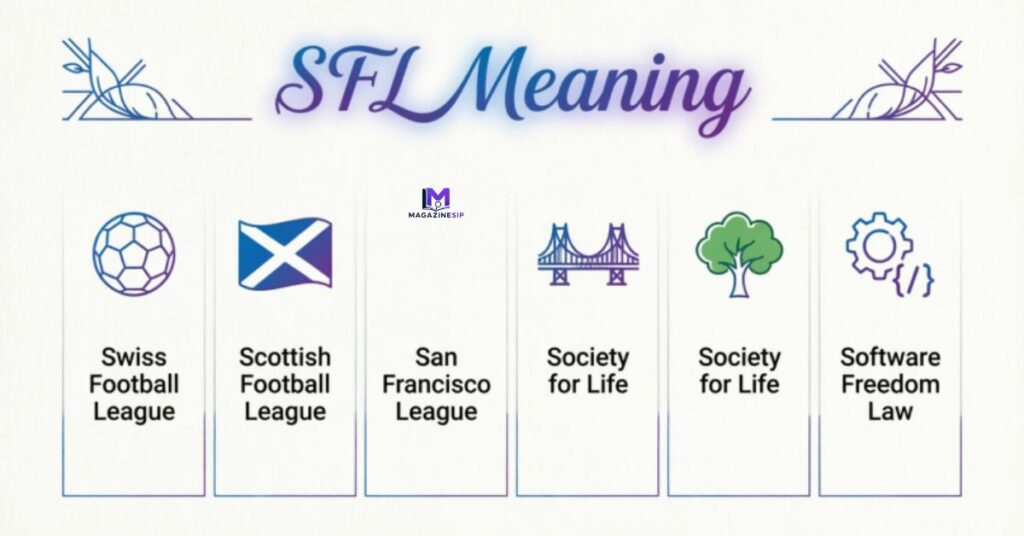
SFL is separate from SFLR and should not automatically be treated as the same abbreviation. Depending on context, SFL can have different meanings, so the surrounding conversation matters.
If someone intended to apologize for a late response, SFLR is the clearer abbreviation. Using only SFL could cause confusion because it does not communicate the same complete idea as “Sorry For Late Reply.”
IIRC meaning
IIRC is a common internet abbreviation meaning “If I Recall Correctly.” It is unrelated to SFLR and is generally used when someone wants to qualify a statement based on memory.
For example, a person might write, “IIRC, the meeting starts at six.” Like many texting abbreviations, IIRC is most comfortable in casual online communication rather than formal writing.
TLDR meaning
TLDR usually means “Too Long; Didn’t Read.” It is commonly used before or after a summary of lengthy content. The abbreviation is especially common in online discussions, forums, social media, and long-form digital conversations.
TLDR and SFLR serve different purposes. TLDR addresses the length of content, while SFLR acknowledges a delayed response. Confusing the two can lead to unnecessary acronym confusion.
SLR meaning
SLR commonly means “Sorry Late Reply” in texting. It is closely related to SFLR and can be used when someone wants to acknowledge a delayed response with fewer letters.
The SFLR Meaning and SLR meaning are therefore similar, but SFLR more explicitly contains the word “For.” Both belong to texting abbreviations and can work in casual conversations when the recipient understands the slang.
Bottom Line
The SFLR Meaning is straightforward: SFLR normally means “Sorry For Late Reply,” and people use it to acknowledge that they are responding later than expected. It works best in casual texting, DMs, group chats, and friendly online conversations where abbreviations are already part of the communication style.
The abbreviation should not replace thoughtful communication when the situation is serious, urgent, emotional, or professional. Choosing between SFLR, “Sorry for the delay,” and a fuller apology depends on the recipient, relationship, response time, and conversational tone.
Conclusion
SFLR is a convenient way to acknowledge a delayed reply without turning an ordinary message delay into a long explanation. Its meaning is easy to understand once you know that the letters commonly stand for “Sorry For Late Reply,” but its tone can change depending on who receives it and why the response was late.
Use SFLR naturally rather than automatically. For friends and casual conversations, it can be friendly and efficient; for professional communication, serious conversations, or emotional situations, clearer language is usually the better choice.
FAQ’s
What does “sflr” mean in a text message?
SFLR usually means “Sorry For Late Reply.” It is used when someone is responding later than expected and wants to acknowledge the delay. It is most suitable for casual texting, DMs, group chats, and other informal communication.
What is the definition of sFLR?
The definition of SFLR is “Sorry For Late Reply.” It is an abbreviation associated with delayed responses in digital communication. It can communicate a brief apology while allowing the sender to move directly into the rest of the conversation.
What does “dslr” mean in a chat?
“DSLR” does not have one universal chat meaning. In general usage, DSLR refers to a type of digital camera, but a person could use the letters differently as a personal abbreviation or typo. The surrounding conversation is necessary to determine an unusual chat-specific meaning.
Is “slr” a sorry late reply?
Yes. SLR is commonly used to mean “Sorry Late Reply.” It serves much the same purpose as SFLR and acknowledges that the sender responded later than expected. SLR is simply a shorter form.
What does stflr mean?
STFLR does not have one widely established standard meaning in everyday texting. It may be a typo, an individual abbreviation, or a context-specific expression. If the intended meaning is unclear, checking the surrounding conversation or asking the sender is the safest approach.
