

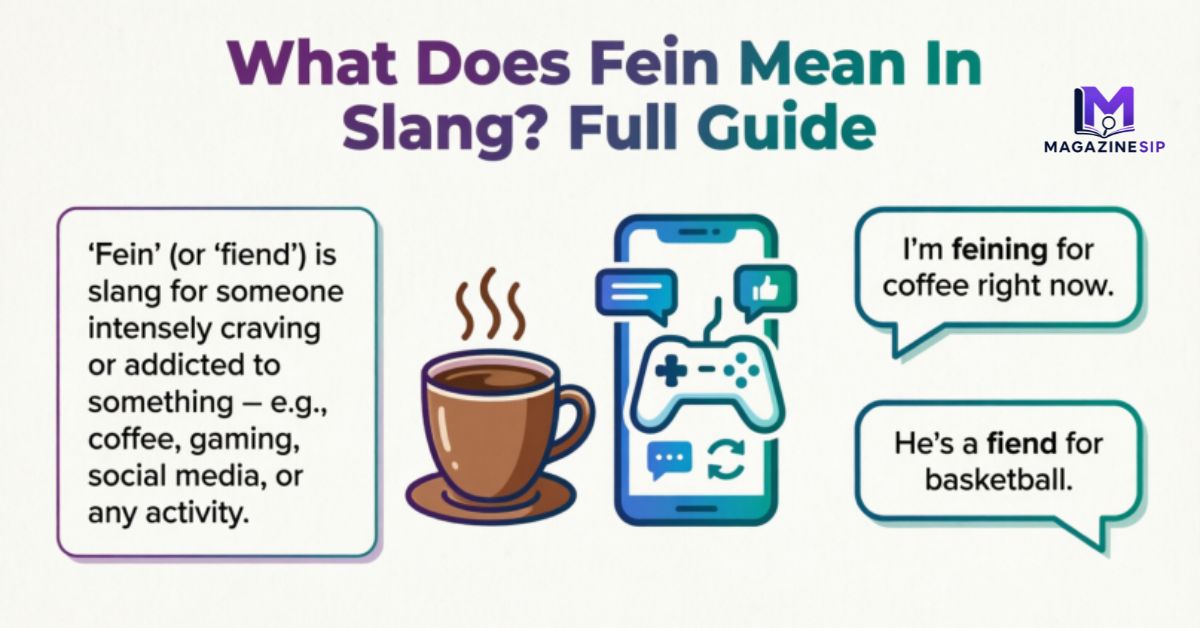
If you have seen “FEIN” or “FE!N” repeated in TikTok captions, concert clips, rap edits, or comments, you may wonder what the word actually means. In modern English slang, it commonly describes an intense craving, strong desire, or being unusually obsessed with something.
The spelling can be confusing because the slang term is connected to “fiend,” while the stylized “FE!N” became especially recognizable through Travis Scott’s music. Depending on context, the word can describe food, fashion, attention, music, excitement, or an exaggerated need for almost anything.
What Does Fein Mean?
Fein is informal slang for someone who has an intense craving or obsessive desire for something. It can suggest that a person is hooked on an object, activity, person, song, or feeling.
The term is closely related to fiend and fiending. In older usage, fiend could describe an addict or someone strongly dependent on something, particularly in drug culture. Modern internet slang often softens that meaning and uses the term playfully for wanting something badly.
For example, someone craving pizza might jokingly say, “I’m fein for pizza.” Someone obsessed with designer sneakers could call themselves a fein for new shoes. A person repeatedly asking for someone’s attention might also use the word to exaggerate that need.
The emotional tone depends heavily on context. In casual language, it can communicate enthusiasm, excitement, hype, or wild energy rather than literal addiction. In rap culture and music culture, however, the word can retain a darker or more aggressive energy because of its connection with the original fiend spelling.
A useful simple definition is:
Fein = someone who strongly craves, wants, or feels obsessed with something.
That makes the word flexible enough for social media posts, texting, memes, gym edits, fashion captions, and everyday jokes.
Origin and History of “Fein”
The slang term developed from the older English word “fiend.” The original spelling has long been associated with someone obsessed with or dependent on something, and in some contexts it became associated with addiction and drug culture.
AAVE, or African American Vernacular English, has played an important role in the development and circulation of many forms of English slang. Like many slang expressions, the meaning can shift as a word moves between communities, music, online culture, and everyday conversation.
The modern spelling “fein” is therefore better understood as a slang variation rather than a completely unrelated word. “Feining” functions as the verb form, especially in phrases such as “feining for” something.
The stylized version “FE!N” gained enormous visibility through Travis Scott’s 2023 song “FE!N,” featuring Playboi Carti, from the album Utopia. The repeated chant in the song helped connect the term with concerts, rap music, high-energy crowds, and internet memes.
That musical association does not mean every use of fein refers to Travis Scott. On social media, people frequently use the ordinary spelling when talking about cravings or exaggerated obsession.
Fein meaning slang
The simplest slang interpretation is “really wanting something” or “being extremely into something.” The word can communicate craving, obsession, enthusiasm, or exaggerated need without necessarily referring to literal addiction.
For instance, “I’m fein for iced coffee” means the speaker really wants iced coffee. “She’s a fein for fashion” suggests an unusually strong interest in fashion. The intended meaning comes from the surrounding sentence and the relationship between the speakers.
In informal communication, fein can therefore function as playful hyperbole. Someone might call themselves a fein for a Starbucks drink, video games, snacks, gym sessions, or new clothes even when there is no serious dependency involved.
FEIN meaning Travis

When people write FEIN in all caps, or especially “FE!N,” they may be referencing Travis Scott rather than simply using general slang. The exclamation mark is strongly associated with the song title and its visual identity.
The song “FE!N” features Playboi Carti and appears on Utopia. Its repetitive hook and intense production helped turn the word into a recognizable chant at concerts and across online videos.
That is why a concert crowd shouting FE!N can communicate hype, excitement, energy, and shared participation rather than a literal craving. The song gave the word an additional pop-culture meaning.
Fein meaning devil
Some people wonder whether fein means “devil” because of the similarity between “fiend” and older words associated with evil or supernatural creatures.
That is not the normal meaning of modern slang fein. The slang spelling generally points toward craving, obsession, or being hooked on something. It should not automatically be translated as devil.
The confusion usually comes from looking at the older word “fiend” rather than the contemporary slang usage. Context matters, especially when the word appears in rap lyrics, memes, or informal conversations.
Fein meaning business
In business, fein is not standard professional terminology. A company document, report, contract, or formal email would normally use words such as eager, interested, enthusiastic, strongly interested, or in demand.
If someone uses fein in a business conversation, it is likely casual language, a joke, a social-media reference, or a deliberate stylistic choice. It should not be treated as a formal business definition.
This distinction is useful for students and professionals because slang vocabulary changes tone. A word that sounds funny among friends may appear unprofessional in a job interview or formal writing.
Fein meaning gen z
Among Gen Z users, fein can be a deliberately exaggerated way to express craving, obsession, excitement, or hype. The exact meaning depends on whether the speaker is talking about food, fashion, music, attention, gaming, or another interest.
Gen Z slang frequently spreads through TikTok, Instagram, Snapchat, X, memes, music culture, and other forms of online communication. A slang term can move quickly from a song or community into mainstream internet culture.
That means someone saying “I’m fein for these sneakers” may simply mean they really want the sneakers. Another person shouting FE!N at a concert may be invoking the Travis Scott song and its high-energy atmosphere.
Drug fein meaning
The historical connection between fiend and addiction explains why some people associate fein with drugs. In older and more serious contexts, fiend could describe a person struggling with addiction or someone strongly dependent on a substance.
Modern slang usage is broader. A person can be “fein” for food, attention, fashion, sleep, music, or almost anything else. The expression can therefore be playful rather than a statement about drug addiction.
Still, parents and educators should understand the drug-adjacent history. A song, lyric, meme, or conversation may use the word with a darker meaning. Context is more important than the spelling alone.
Fein meaning slang TikTok
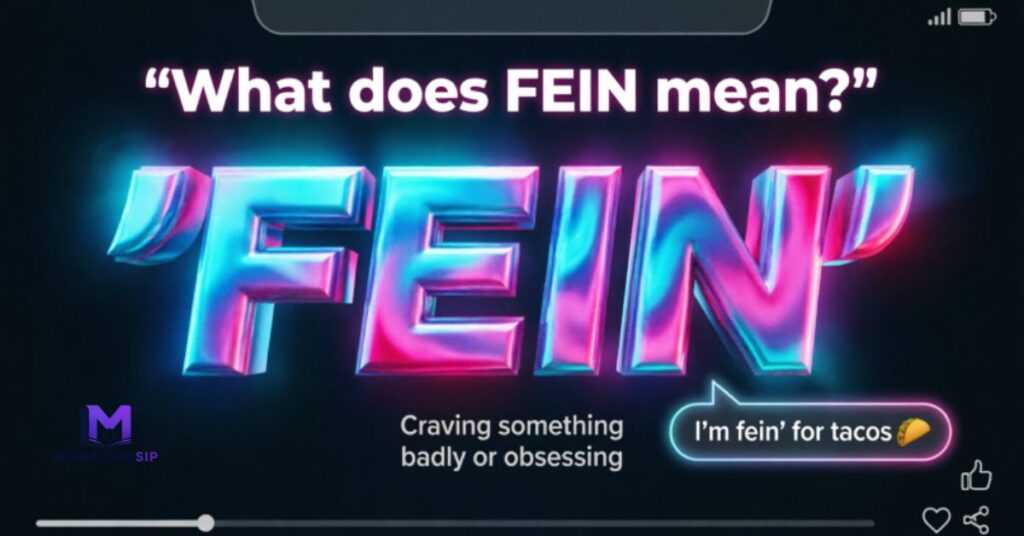
On TikTok, fein often appears in captions, comments, gym edits, concert videos, hype videos, and memes. Users may use it to make an ordinary craving sound dramatic or energetic.
Someone posting a pre-workout routine could joke that they are “fein” for the gym. A food video might use “feining” to describe craving a burger or spicy chicken nuggets. A fashion video might use FE!N as an exaggerated reaction to an outfit.
The platform-specific meaning is therefore flexible. TikTok slang can combine music references, meme culture, youth slang, and ordinary English in a single post.
Read More: What Does Yuh Mean in Slang? Full Guide with Examples
Fein meaning German
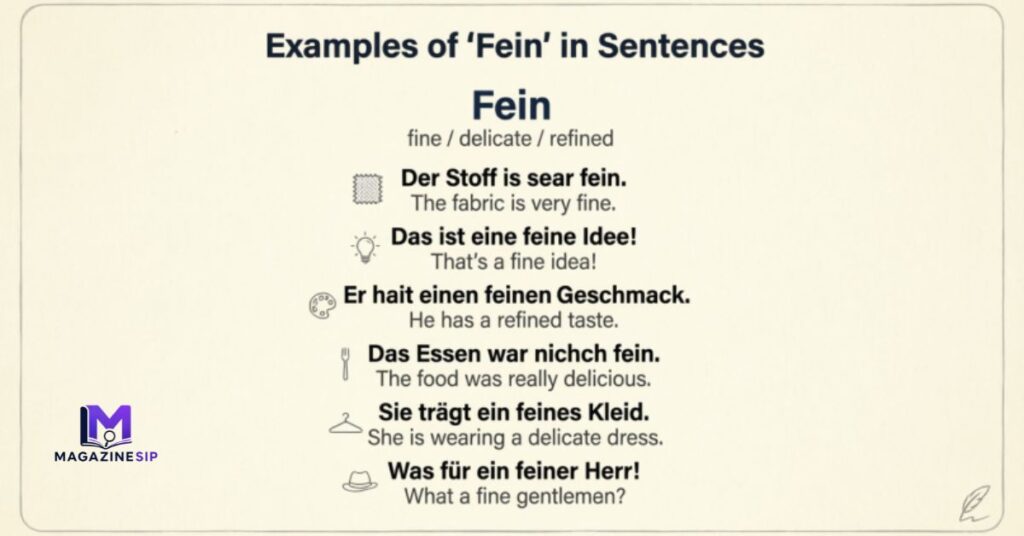
German creates a separate source of confusion because “fein” is an actual German word. In German, fein can mean “fine,” “delicate,” “nice,” or “good,” depending on context.
That German meaning is unrelated to the English slang usage discussed in this guide. If you encounter fein in a German sentence, you should interpret it according to German grammar and context rather than automatically treating it as internet slang.
The English slang term is connected to fiend and modern online usage, while German fein has its own linguistic history.
How “Fein” Is Used on Different Platforms
Different platforms can give the same slang word slightly different tones. TikTok tends to emphasize trends, music, gym edits, memes, and short captions. Instagram often uses the term alongside fashion, concert photos, aesthetics, and hype content.
Snapchat and X can feature more conversational uses. A person might post about craving pizza, needing sleep, wanting someone’s attention, or being excited about a new purchase.
| Platform | Common use | Tone | Example |
| TikTok | Gym edits, memes, music clips | High-energy | “Feining for that pre-workout.” |
| Fashion, concerts, aesthetics | Cool or playful | “FE!N for this outfit.” | |
| Snapchat | Food and everyday cravings | Casual | “I’m fein for pizza.” |
| X / Twitter | Jokes and random cravings | Conversational | “I’m fein for some sleep.” |
The word is particularly effective in short social media captions because it compresses a longer idea into one expressive term. Instead of saying “I desperately want this,” a user can simply write “FEIN.”
Fein in Texting vs. Real Life
In texting, fein is usually casual language. Friends may use it to exaggerate wanting something, being obsessed with something, or feeling excited.
Texting slang is often deliberately short and expressive. A message such as “I’m fein for coffee” can communicate a craving without requiring a long explanation. “FEIN” in capital letters can add extra emphasis.
In real-life speech, the term can sound louder and more energetic, particularly when connected with rap music, a concert, a party, or a group chant. The spoken version may carry more intensity than the same word in a private text.
The difference is largely about delivery. Online, spelling, capitalization, emojis, captions, and memes create tone. In person, voice, volume, facial expression, and surrounding activity do the same job.
Examples of “Fein” in Sentences
Here are original examples showing several common uses:
- “I’m such a fein for spicy chicken nuggets.”
- “He’s a fein for the gym and never wants to leave.”
- “She’s feining for iced coffee this morning.”
- “I’m feining for your attention right now.”
- “They’re fein for the new designer sneakers.”
- “I’m fein for that burger after practice.”
- “She’s a fein for concert tickets.”
- “He’s feining for another video game.”
- “I’m fein for a good Starbucks drink.”
- “Everyone became a FE!N when the beat dropped.”
- “The crowd was feining for another song.”
- “I’m a fein for sleep after that long week.”
- “He’s fein for the latest fashion drop.”
- “She’s feining for a new outfit.”
- “That song has me feeling like a total fein.”
These examples show why the word is not limited to food or drugs. It can describe wanting attention, craving entertainment, liking fashion, seeking excitement, or reacting to music.
Example Chat
Maya: Are you coming to the concert?
Jay: Absolutely. I’m fein for that beat drop.
Maya: You have been talking about it all week.
Jay: I know. I’m basically obsessed.
Maya: That is definitely the right use of the word.
Jay: FE!N mode activated.
The example demonstrates how slang works naturally in a casual conversation. The speaker is expressing enthusiasm rather than making a literal statement about addiction.
Variations and Related Slang
The main related forms are fiend, feining, and FE!N. Fiend is the traditional spelling, while fein is a modern slang variation. Feining works as a verb in expressions such as “feining for pizza.”
“FE!N” has a particularly strong association with Travis Scott, Playboi Carti, Utopia, concerts, rap culture, and high-energy music. The exclamation mark makes the expression visually distinctive.
Another related term is geeking. Both words can communicate intense excitement or an unusually energetic state, although they are not interchangeable in every context. Geeking can also carry its own drug-related history depending on context.
| Term | General meaning | Typical context |
| Fein | Strong craving or obsession | Modern slang |
| Fiend | Traditional form; obsessive person or addict | Older or serious usage |
| Feining | Wanting something badly | Informal speech and texting |
| FE!N | Stylized spelling and song reference | Music, memes, concerts |
| Geeking | Very excited or intensely focused | Slang and online culture |
The important distinction is that spelling alone does not determine every meaning. The surrounding words, platform, speaker, and cultural reference all influence interpretation.
Is “Fein” Safe for Kids?
Fein is generally not a swear word or slur. In many online conversations, it is used as harmless slang for craving something or being excited about something.
However, parents should understand that the word has a historical connection with fiend, addiction, and drug culture. Some lyrics or online posts may use related vocabulary in a more adult context.
A child using fein to describe craving a snack is very different from a song or post discussing drug addiction. The same word can therefore appear in both child-friendly slang and mature content.
For parents, the safest approach is to evaluate the complete sentence, video, lyrics, comments, and surrounding context rather than treating the word itself as automatically inappropriate.
Teachers may also prefer students to avoid slang terminology in formal writing. A school essay should normally use precise standard English instead of casual internet vocabulary.
When to Use (and Avoid) “Fein”
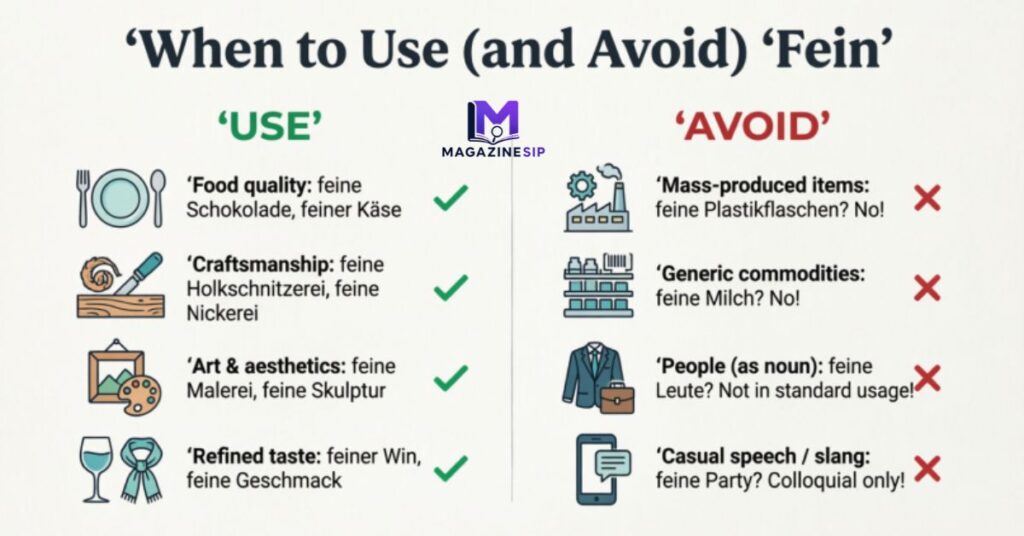
USE IT WHEN:
- You are texting close friends.
- You are making a playful social media caption.
- You are discussing a strong craving.
- You are reacting to a song or concert.
- You are joking about food.
- You are talking about fashion or sneakers.
- You are discussing a gym routine.
- You are sharing a meme.
- You are participating in a music-related trend.
- You are using informal language intentionally.
AVOID IT WHEN:
- You are writing a formal school essay.
- You are attending a professional interview.
- You are writing a business report.
- You are sending a formal workplace message.
- You need precise, standard English.
- Your audience may not understand slang.
- Drug-related connotations could create confusion.
- You are speaking in an official setting.
- You are writing for a formal publication.
- You need language suitable for a professional setting.
The key rule is audience. Casual social contexts allow much more slang than formal writing. If you are unsure, words such as eager, enthusiastic, interested, excited, or craving are clearer alternatives.
Conclusion
Fein is modern informal slang for an intense craving, strong desire, or exaggerated obsession with something. It can describe food, fashion, attention, music, gaming, sleep, or almost any interest, while FE!N has an especially strong connection with Travis Scott and rap culture. The older fiend connection also explains its association with addiction and drug-adjacent language.
The safest way to understand the term is to read the surrounding context. On TikTok or in a meme, it may simply express hype or humor; in music, it can signal a high-energy chant; and in formal writing, it is better avoided. Like much internet slang, its meaning changes with community, platform, tone, and situation.
FAQ’s
What is a fein in slang?
A fein in slang is someone who strongly craves or wants something. The word can describe an intense desire for food, attention, fashion, music, entertainment, or another interest.
It is related to the traditional word fiend, but modern casual usage is often playful. Calling someone a fein does not automatically mean that person has an addiction.
What does fein mean?
Fein generally means having a strong craving, intense desire, or exaggerated obsession with something. It is informal English slang and is often used humorously.
For example, “I’m fein for pizza” means “I really want pizza.” The expression can also communicate excitement or hype, depending on the situation.
What is a fein for drugs?
Historically, the related word fiend has been used for someone associated with addiction or strong dependence, including drug addiction. That history is why fein can sometimes have drug-related connotations.
Modern slang is much broader. Someone may use fein for harmless things such as food, sleep, music, fashion, or attention. The surrounding context determines whether the reference is serious or playful.
What is fein in gen Z?
In Gen Z slang, fein commonly expresses exaggerated craving, obsession, excitement, or desire. It appears in internet slang, social media captions, comments, memes, music culture, and casual texting.
The word can also function as a pop-culture reference to “FE!N,” especially when it appears alongside Travis Scott, Playboi Carti, concerts, rap music, or high-energy videos.
What does Travis Scott’s song “Fein” mean?
Travis Scott’s “FE!N,” featuring Playboi Carti on Utopia, is strongly associated with repetition, intensity, energy, and a hypnotic chant. The song helped make the stylized spelling widely recognizable in internet and music culture.
